
Small Business Bookkeeping Built Around Your Business
Books worth reading. Numbers worth knowing.
Monthly bookkeeping for small businesses, with the reports and explanations to go with it. Based in Chichester, NH, working with owners across New England and nationwide.
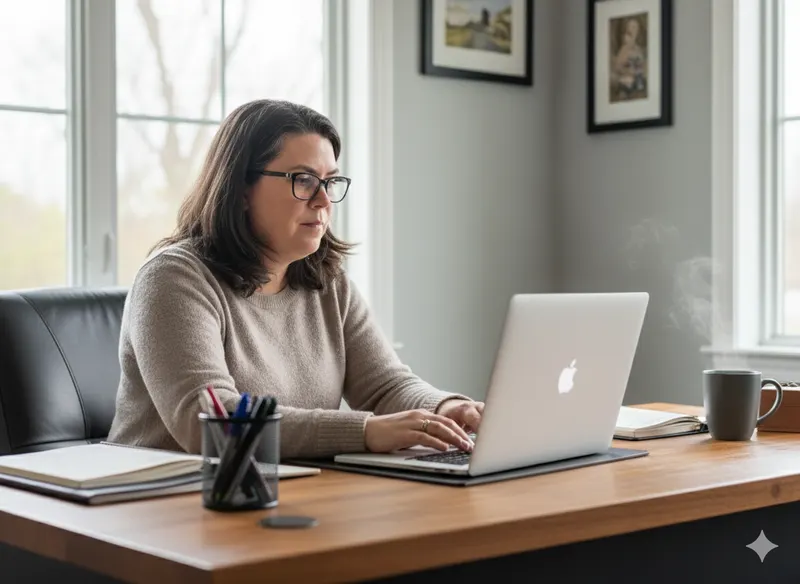
Robyn LeBreton
Owner & Lead Bookkeeper
Clean books are only useful if you understand them.
Know What's Happening
Your accounts are reviewed and reconciled each month so your books stay current.
Understand What It Means
Your Profit & Loss and Balance Sheet should make sense—not just arrive in your inbox.
Decide What Comes Next
Reliable numbers give you a better starting point for decisions about hiring, pricing, taxes, inventory, owner pay, and growth.
Work Directly With Your Bookkeeper
No rotating team or offshore handoffs. You work directly with Robyn.
Ongoing Bookkeeping Support
Monthly bookkeeping
Predictable monthly pricing, no surprise hourly invoices. Pick the level that matches your transaction complexity.
Essential Bookkeeping
Monthly reconciliations and reports for straightforward service businesses and solo consultants.
Operational Bookkeeping
For businesses with active invoicing, vendor bills, contractors, and more moving pieces.
Commerce Bookkeeping
For retail, e-commerce, and trade businesses managing sales channels, processors, inventory, COGS, and other transaction complexity.
Choose your bookkeeping package, add optional services, and see the estimated monthly cost.
Accounting software is billed separately at direct vendor pricing. QuickBooks Online & Xero supported — you retain full ownership of your accounts.
Xero-First Bookkeeping for Small Businesses
Xero-first. Not Xero-only.
Already using Xero? You're in the right place. Curious whether Xero is a better fit than QuickBooks? We can help you figure that out. And if you're not ready to switch, that's fine too — we can keep working in QuickBooks Online until the timing makes sense.
Not Ready for Monthly Bookkeeping?
Other ways to work together.
You don't have to choose between hiring a monthly bookkeeper and figuring it out alone.
Not sure your setup is right?
Free Bookkeeping Systems Review
A free second opinion on your accounting software, subscription level, accounts, integrations, and bookkeeping workflow.
Want to keep your own books?
Guided Bookkeeping
Xero-based support for owners who want to maintain their own books with professional setup, review, and guidance.
Starting from scratch?
Bookkeeping Setup
Build your bookkeeping correctly from the start — chart of accounts, software configuration, and a workflow that fits your business.
Behind or books you don't trust?
Bookkeeping Cleanup
Fix books that are behind, unreconciled, or incorrect — catch up on past periods and get back to a clean, trustworthy starting point.
Stuck on one thing?
Bookkeeping Help Session
A focused one-on-one for a specific bookkeeping question or problem — no ongoing monthly commitment.
Bookkeeping for Your Type of Business
Support shaped around how your business actually works.
The right bookkeeping depends on how you get paid and how much is happening behind the scenes. Start with the category that fits closest.
Selling services
Service Businesses
Consultants, coaches, freelancers, wellness providers, and creative professionals with straightforward service income.
Invoices, projects & retainers
Agencies & Project-Based Businesses
Agencies, event businesses, and project-based firms managing invoices, vendor bills, deposits, and retainers.
Products, sales channels & inventory
Retail & E-Commerce
Retailers, online sellers, and makers dealing with sales platforms, payment processors, COGS, and inventory.
How it works
Getting Started Is Simple
Getting help with your books shouldn't feel like another big project.
Choose Your Starting Point
Choose a service or talk it through
Choose a bookkeeping service, use the Package Finder, request a Free Systems Review, or book a call if you want to talk it through.
We Confirm What You Need
Clear scope and next steps
You'll receive clear instructions for securely sharing any access or records we need. We'll confirm the scope, identify any setup or cleanup needs, and make sure pricing and next steps are clear before work begins.
We Get Started
The support that fits
From there, we begin the service that fits—monthly bookkeeping, Guided Bookkeeping, Setup, Cleanup, or focused one-on-one help.
What clients say about working with REaL Books
"Working with Robyn has helped me gain a much deeper understanding of my business finances. She explains things clearly, helps me see the bigger picture, and gives me the information I need to make better decisions for my business. I highly recommend REaL Bookkeeping LLC."
Sarah Anstey
Agency Founder
"I've thoroughly enjoyed learning bookkeeping best practices through Robyn over the last year. Robyn is a wealth of knowledge. She has a way of taking complex accounting principles and financial models and describing them in simple terms, which I greatly appreciate."
Jacqui O'Shea
Consultant
"I can't say enough good things about Robyn at REaL Bookkeeping. She is an absolute whiz and has completely transformed how I track my business finances. She is professional, highly accurate, and always answers my questions quickly. Working with her gives me total peace of mind!"
Suzanne Guzman
Business Owner

Robyn LeBreton
Owner & Principal Bookkeeper
Based in Chichester, NH — Serving clients across New England and nationwide remotely.
THE PERSON BEHIND THE BOOKS
Bookkeeping with a real person on the other side.
I'm Robyn LeBreton, the bookkeeper behind REaL Books. I started this because too many owners get handed reports they can't read, or get passed around a service where nobody actually answers their questions.
My background is in technology, risk management, public finance, and hands-on small business bookkeeping. I also serve as Chichester Town Treasurer and Treasurer of the Live Free Business Alliance.
As a U.S. Navy veteran and small business owner, I take accuracy and stewardship seriously. I don't hide behind jargon or a ticket queue. When you work with REaL Books, you know who's reviewing your transactions.
"When your books make sense, your decisions become much simpler."
Whether you're nearby or working with me remotely, the goal is the same: records you can trust and numbers you understand.
Free Bookkeeping Resources
Checklists, calculators, and practical tools.
Free tools to help you understand your numbers and keep your books organized — no signup required.